Leading Banks in the United States

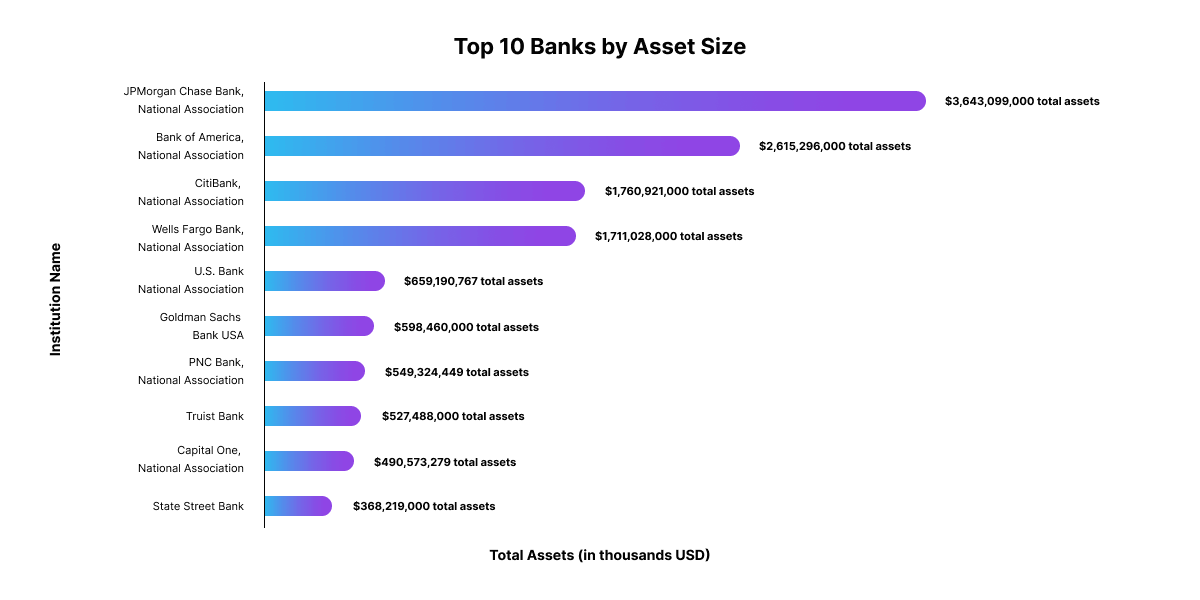
Navigating the landscape of financial institutions in the United States can be a complex task, especially when seeking banking services or considering loan options. The U.S. boasts a diverse banking sector, ranging from large national institutions with extensive branch networks to smaller community banks and specialized credit unions. Understanding the prominent players can provide valuable insight into the services and reach available to consumers and businesses across the country.
Understanding the U.S. Banking Landscape
The United States has one of the most developed and diversified financial markets globally. Banks in the U.S. are broadly categorized into several types, including commercial banks, savings and loan associations, and credit unions. Commercial banks are the most common, offering a wide array of services such as checking and savings accounts, loans, mortgages, and investment products. They can be national or state-chartered and are regulated by federal and state authorities. Savings and loan associations, often referred to as thrifts, historically focused more on mortgages and savings accounts, though their services have broadened. Credit unions are non-profit member-owned cooperatives that provide services similar to banks, often with a focus on member benefits and community involvement.
Major National Banks and Their Offerings
Several large, nationally recognized banks dominate the U.S. financial sector, known for their vast branch networks, extensive ATM coverage, and comprehensive digital banking platforms. These institutions typically offer a full suite of financial products, including personal and business banking, credit cards, mortgages, auto loans, and investment services. Their significant market share means they often set industry standards for technology and customer service. While they offer convenience and a wide range of options, their large size can sometimes translate to less personalized service compared to smaller institutions. However, their robust online and mobile banking capabilities often compensate for this, providing sophisticated tools for managing finances remotely.
Regional Banks and Their Strengths
Beyond the major national players, regional banks hold a significant position in the U.S. market. These banks, while not having the same nationwide presence as the largest institutions, often have a strong footprint within specific geographic areas. They tend to combine the broader service offerings of national banks with a more focused approach to customer relationships, catering to the specific economic and social needs of their regions. Regional banks can be an excellent choice for consumers and small to medium-sized businesses seeking a balance between comprehensive services and personalized attention. They often play a vital role in local economic development through their lending practices and community engagement.
Community Banks and Credit Unions: Local Focus
Community banks and credit unions represent the local face of banking in the United States. Community banks are typically independent, locally owned, and operated, with a deep understanding of the markets they serve. They are often a cornerstone of their local economies, providing personalized service and tailoring their offerings to meet the needs of local residents and businesses. Credit unions, as mentioned, are not-for-profit organizations owned by their members. They often offer competitive interest rates on savings and loans and are known for their commitment to member education and financial well-being. While their geographic reach might be limited, their focus on member satisfaction and community support makes them highly valued institutions.
The choice between a large national bank, a regional institution, or a local credit union often depends on individual banking needs, preferred service style, and the importance placed on community involvement. Each type of financial institution offers distinct advantages and disadvantages for consumers.
Factors to Consider When Choosing a Bank
When selecting a bank in the United States, several key factors should be weighed. Consider the variety of accounts and loan products offered, such as checking, savings, money market accounts, personal loans, auto loans, and mortgages. Fee structures are also crucial; understanding monthly maintenance fees, ATM fees, overdraft fees, and other charges can significantly impact your overall banking costs. The accessibility of branches and ATMs, particularly if you prefer in-person transactions, is another important consideration. Furthermore, the quality of digital banking services, including mobile app functionality, online bill pay, and security features, is increasingly vital for managing finances efficiently. Customer service reputation, whether through online reviews or word-of-mouth, can also provide valuable insights into an institution’s reliability and responsiveness.
Frequently Asked Questions
What are the largest banks in the U.S. by asset size?
The largest banks in the U.S. by asset size are consistently JPMorgan Chase, Bank of America, Citigroup, and Wells Fargo. These institutions manage trillions of dollars in assets and have a vast national and international presence.
How do credit unions differ from traditional banks?
Credit unions are non-profit cooperatives owned by their members, while traditional banks are for-profit entities owned by shareholders. Credit unions often offer members more favorable rates on savings and loans and typically focus on providing financial services to a specific group or community.
Are online banks a viable alternative to traditional banks?
Yes, online banks can be a viable alternative, often offering higher interest rates on savings accounts and lower fees due to reduced overhead. They provide full digital banking services, but lack physical branches for in-person transactions.
What are the benefits of using a community bank?
Community banks are known for their personalized customer service, deep understanding of local markets, and support for local businesses and economies. They often offer more flexible lending options tailored to the community’s needs.
In conclusion, the U.S. banking sector is robust and varied, offering numerous options for consumers and businesses. From the expansive networks of national banks to the community-focused approach of regional banks, community banks, and credit unions, individuals can find institutions that align with their financial needs and preferences. Researching specific offerings, fee structures, and customer service reputations is key to making an informed decision.
Conditions may vary; check official rules.
Sources: [U.S. Department of the Treasury, Federal Reserve System]